
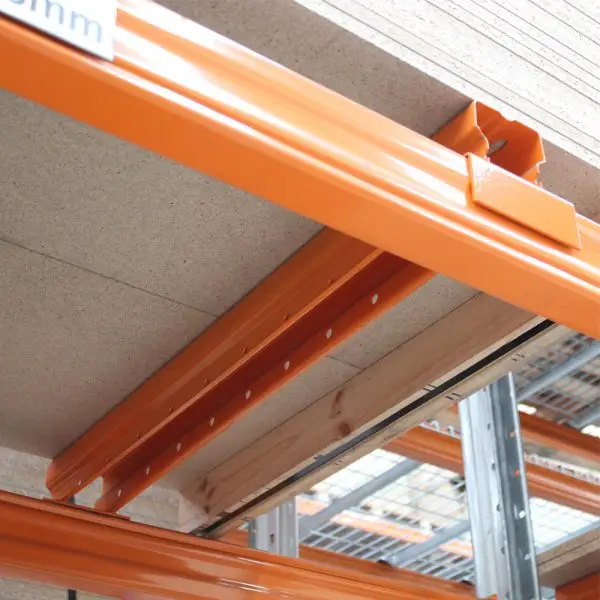
Why These Small Components Make a Big Difference
Most conversations about pallet racking focus on frames, beams and layouts. But in many warehouses, the real risk sits at beam level – where pallets, stillages and awkward loads actually touch the steel.
Fork-entry bars, pallet supports and skid channels are three of the most important (and misunderstood) racking accessories for controlling that interface.
Used correctly, they:
-
Reduce point loads and pallet failure
-
Improve forklift handling and pick speeds
-
Protect beams from damage and deflection
-
Support compliance with AS 4084 and engineered load ratings in Australia
Used poorly – or not at all – they can quietly undermine the safety margin you think you have.
This guide unpacks what each component actually does, when to choose one over the others, and how to integrate them into a compliant pallet racking system.
Quick Definitions: Fork-Entry Bars vs Pallet Supports vs Skid Channels
Fork-entry bars
Fork-entry bars (sometimes called fork clearance bars or forklift entry bars) are heavy-duty bars that sit across a pair of beams, usually front-to-back or side-to-side depending on the system. Their job is to:
-
Lift the load slightly above the beam
-
Create a clear “tunnel” or pocket for the forklift tines
-
Support non-standard or non-palletised loads that don’t sit neatly on beam top flanges
They’re common where you store:
-
Bundles of steel, timber or extrusions
-
Machinery, dies, tooling or moulds
-
Drums, coils or large rigid items on timber bearers or cradles
In short: fork-entry bars are about fork access and clearance for awkward loads.
Pallet supports
Pallet supports (or pallet support bars) are usually lighter, formed sections installed between beams, left-to-right across the bay. Their main role is to:
-
Provide extra bearing under the bottom deck boards of a pallet
-
Reduce “sag” between beams, particularly on longer beam spans
-
Support undersized, damaged or one-way pallets that don’t fully reach from beam to beam
They’re typically used with:
-
CHEP/Loscam pallets in poor condition
-
One-way or lightweight pallets
-
Cartonised product or mixed loads that overhang the pallet a little
In short: pallet supports are about spreading load and protecting beams when the pallet itself isn’t perfect.
Skid channels
Skid channels (often called stillage channels or post-pallet channels) are U-shaped channels that run front-to-back over the beams. Loads sit in or on these channels, which:
-
Capture and locate the feet or runners of stillages, post pallets, cages or bins
-
Spread concentrated point loads from those feet into the beams
-
Help operators position containers consistently and safely in the bay
In short: skid channels are about locating and supporting container feet or skids – not pallets.
When to Use Fork-Entry Bars
Fork-entry bars are the right choice when your biggest problem is how the forklift engages the load, not the pallet itself.
Ideal scenarios for fork-entry bars
You should be thinking about fork-entry bars if you have any of these:
-
Non-palletised long goods
Bundles of steel, timber packs, aluminium extrusions or pipe that are banded together and lifted directly with the forks. -
Heavy, rigid items on bearers
Machines, dies, moulds or heavy components sitting on timber or steel bearers where precise fork positioning is critical. -
Drums, coils and cylindrical loads
Where cradles or stillage frames sit directly on the bars, or where drums are blocked in place and lifted with forks rather than pallets. -
Specialised handling zones
For example, bays set up as load/unload stations for maintenance items, tooling or jigs that don’t justify a full custom rack design.
Benefits
-
Better fork clearance and fewer “snags” under awkward loads
-
Less risk of a fork catching a beam when extracting a load
-
More predictable load positioning in the bay
-
Potential to store non-palletised items in standard pallet racking solutions
Watchpoints
-
Fork-entry bars must be engineered for your racking brand, beam length and load case – not just “close enough” aftermarket steel.
-
They are not a substitute for proper stillages or cradles where loads can roll or shift.
-
Any change in how you support loads may affect the racking’s certified capacity and load signs; you can’t assume previous ratings still apply.
When to Use Pallet Supports
Pallet supports are the “quiet achiever” in many warehouses – cheap, simple and extremely effective when pallets aren’t perfect.
Ideal scenarios for pallet supports
You’re a good candidate for pallet supports if:
-
Pallet quality is inconsistent
Mix of CHEP/Loscam and one-way pallets; boards missing, cracked or thin. -
Beam spans are long
For example, 2700 mm or 3000 mm beams carrying three or four pallets per level where deflection is a concern. -
You run VNA or high-bay racking
Small issues at height have big consequences; supports provide a safety net against marginal pallets. -
You use mesh decks heavily loaded with pallets
Sometimes pallet supports are used under mesh to share the load between beams and reduce deflection. -
You occasionally store non-standard pallets
Narrow, custom or export pallets that don’t fully bear on the beams.
Benefits
-
Reduced risk of pallet bottom boards breaking or “sagging” between beams
-
Better support for undersized or damaged pallets
-
Relatively low cost compared to beam upgrades or full decking
-
Installation and reconfiguration is usually simple during maintenance windows
Watchpoints
-
Pallet supports must be matched to the beam length, spacing and capacity of the racking; overloading supports can still damage beams.
-
Don’t use pallet supports as an excuse to keep unsafe pallets in circulation. You still need a clear pallet quality standard.
-
If pallet supports change how loads are distributed, your pallet racking load signs may need review to ensure they match the engineered configuration.
When to Use Skid Channels
Skid channels come into their own when pallets are not your main storage medium.
Ideal scenarios for skid channels
Consider skid channels if you store:
-
Post pallets and stillages
Steel post pallets or custom stillage bases with fixed feet, designed to stack or be double-handled. -
Wire cages and bulk bins with corner feet
Common in automotive, manufacturing and 3PL environments where bulk parts live in cages or metal bins. -
Plastic or steel bins with runners
Containers built with skids instead of a full pallet footprint. -
Standard containers in defined flow lanes
Where you want every stillage to drop into the same position for labelling, scanning or automation interfaces.
Benefits
-
Spreads concentrated point loads from pallet feet or runners into the beams
-
Guides operators to place containers correctly and consistently
-
Reduces the risk of feet slipping off beam edges
-
Makes it easier to maintain clear flue spaces and consistent load overhang
Watchpoints
-
Skid channels must be engineered around the actual containers you use – foot spacing, weight and stacking patterns matter.
-
Mixing different stillage types in the same bay can lead to unsafe foot positioning.
-
As with other accessories, skid channels must be part of the certified design – not welded-up “specials” added on site.
Fork-Entry Bars vs Pallet Supports vs Skid Channels: A Simple Decision Guide
When you’re under pressure to “just get more storage in”, it’s easy to throw the wrong component at the problem. Use this quick rule-of-thumb:
1. What’s actually touching the beams?
-
Standard pallets (CHEP/Loscam or similar):
– Primary risk: pallet quality and span
– Most likely solution: pallet supports -
Non-palletised or long loads:
– Primary risk: safe fork entry and clearance
– Most likely solution: fork-entry bars -
Stillage, post pallets, cages or bins with feet/runners:
– Primary risk: concentrated point loads and correct location
– Most likely solution: skid channels
2. What problem are you trying to solve?
-
Loads feel “bouncy” or sag between beams → look at pallet supports or appropriate decking
-
Forks regularly catch or drag on loads → consider fork-entry bars and better lead-in
-
Stillages feel unstable or feet are close to beam edges → investigate skid channels and container design
3. How repeatable is the load?
-
Same load, same container, same bay every time
→ Optimise with engineered skid channels or fork-entry bars designed around that exact use case. -
Constantly changing loads and pallets
→ Prioritise universal solutions: high-quality beams, mesh decks, pallet supports and clear operational rules.
Safety, Compliance and AS 4084: Don’t Treat Accessories as “Extras”
Under AS 4084, pallet racking in Australia is treated as plant/structure – with clear obligations around design, installation, signage and inspection.
Accessories like fork-entry bars, pallet supports and skid channels are part of that system, not optional extras bolted on later.
Key safety principles
-
One engineered system, not a mix-and-match kit
Accessories should come from (or be approved by) the racking supplier or engineer for your specific frames, beams and loads. -
Load signs must reflect reality
If you change how loads are supported or what is stored in each bay, your engineered capacities and pallet racking load signs may need reviewing and re-issuing. -
Inspections should include accessories
Annual independent audits and regular in-house checks should look for bent supports, damaged skid channels, missing fork-entry bars and any field modifications.
If there’s any doubt, treat accessories as a trigger to get your racking rechecked – not as a shortcut around proper engineering.
A Practical 5-Step Check for CEOs and Warehouse Managers
You don’t need to be an engineer to spot the obvious gaps.
-
Walk the warehouse
-
Note where you store non-standard loads: long goods, stillages, cages, machinery.
-
Identify bays where pallets look marginal or overhung.
-
-
List support types in use
-
Where are you relying purely on beams?
-
Where do you already have pallet supports, mesh decks, fork-entry bars or skid channels?
-
-
Match risks to accessories
-
Non-palletised loads without fork-entry bars?
-
Post pallets sitting directly on beams with tiny contact points?
-
Damaged pallets running on long spans with no intermediate support?
-
-
Check documentation and signage
-
Do you have drawings, capacity data and load signs that match what you actually store in each zone?
-
-
Engage a specialist to formalise the design
-
Use a provider who can both design and sign off the system to AS 4084, not just supply components.
-
How Better Storage Systems Can Help
Better Storage Systems doesn’t just sell beams and frames; the team designs complete, engineered pallet racking solutions – including the right mix of accessories – across Brisbane, Sydney and wider Australia. Better Storage+2Better Storage+2
Depending on your situation, that might include:
-
Reviewing your current loads and recommending the right combination of fork-entry bars, pallet supports, skid channels and decking
-
Integrating accessories into new pallet racking systems from day one, so you avoid retrofitting later
-
Conducting a formal pallet racking safety audit and repair to AS 4084 and issuing updated certification and load signs
If you’re looking at a new warehouse or trying to tame a messy existing one, choosing the right beam-level support can be the difference between a racking system that “just works” and one that keeps you awake at night.