
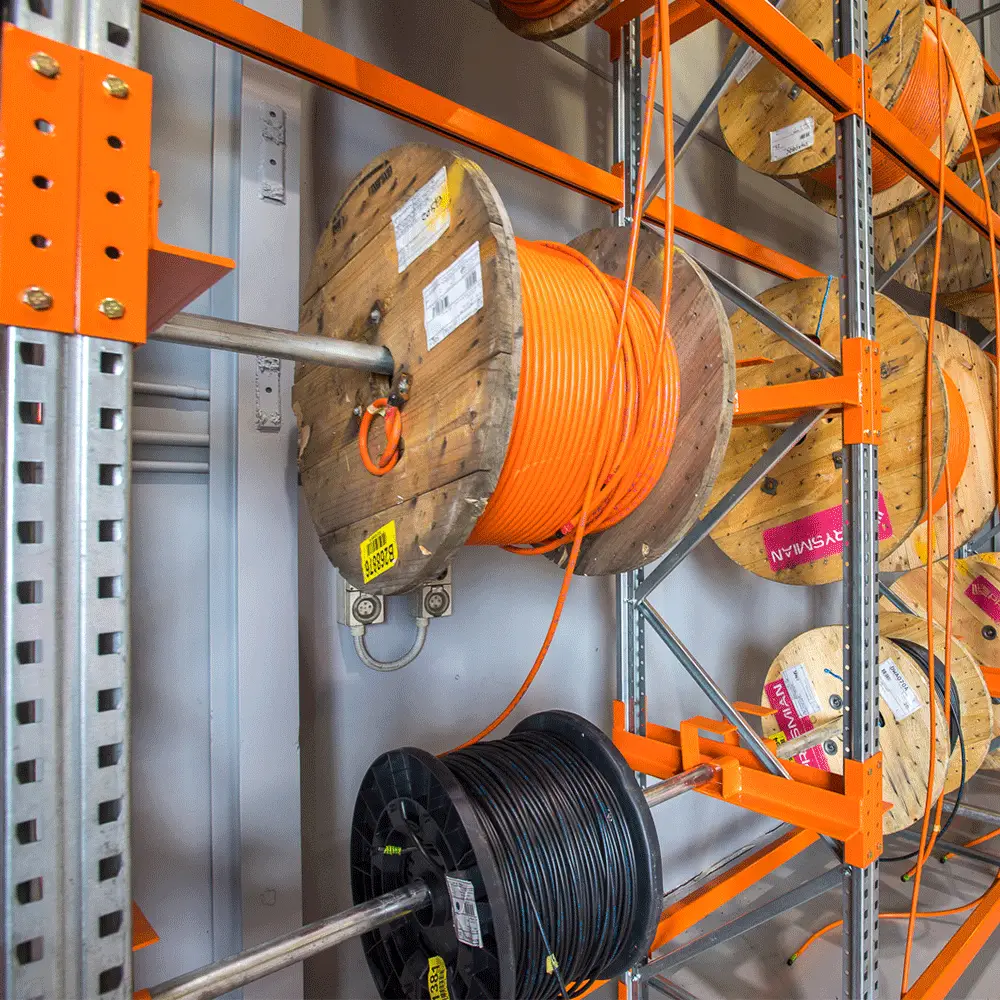
Why Cable Drums, Carpet Rolls and Coils Are a Different Risk Category
Cable drums, carpet rolls and metal coils are deceptively simple products: they’re “just” round loads. But from a storage and safety perspective they behave very differently to standard pallets:
-
They can roll or shift unexpectedly if not properly cradled.
-
Weight is highly concentrated at a few contact points, which can overload standard pallet beams if not designed for point loads. WorkSafe Tasmania
-
Manual handling is harder – especially where operators are trying to “chock” drums or balance coils on improvised timber blocks.
-
The consequences of failure (rolling, tipping or dropping) can be severe, particularly with heavy steel coils.
The good news is you usually don’t need to invent a completely new storage system to handle these products. In most warehouses, the safest and most practical answer is to start with proven pallet racking and then use engineered accessories and specialist rack types designed for round and rolled loads – exactly the direction Better Storage Systems takes with its range of cable drum and steel coil racking solutions.
Core Principles for Safely Storing Round & Rolled Loads
Before we talk specific rack types, it helps to anchor your decisions in a few design principles that align with AS 4084 and current best practice for steel storage racking.
1. Correct load path
Round loads should always be supported in a way that clearly transfers weight:
-
From the drum/coil/roll
-
Into a cradle, bar or deck
-
Into the front and rear beams
-
Into the upright frames and down to the slab
Relying on a couple of small contact points on a standard pallet or a piece of timber is not a compliant design approach. Uneven point loads are specifically called out as needing engineering approval. WorkSafe Tasmania
2. Containment and anti-roll security
The system should:
-
Prevent products from rolling off front or back.
-
Avoid “walking” across beams during loading/unloading.
-
Include end stops, cradles or spigots where appropriate.
3. Safe handling and ergonomics
The storage method should make life safer and faster for your operators:
-
Clear forklift approach paths
-
Minimal need for operators to climb into bays or manipulate drums by hand
-
For cable, the ability to dispense from the rack instead of constantly lifting drums in and out
4. Compliance and documentation
Whatever you install should:
-
Be designed for the actual size, weight and handling method of your drums, coils or rolls
-
Be detailed on your pallet racking load signage and documentation
-
Be covered by your regular racking safety inspections in line with AS 4084.2’s operation and maintenance guidance.
Option 1: Cable Drum Racking – When the Rack Becomes a Dispenser
If you store electrical cable, data cable or any product supplied on reels, a dedicated cable drum racking system is almost always the safest and most efficient choice.
How cable drum racking works
Cable drum racking is built around standard pallet racking frames and beams, but adds:
-
Heavy-duty support bars or shafts that the drums sit on
-
Spindle or axle arrangements that allow the drum to rotate
-
Access space at the front so cable can be pulled and cut directly from the rack
The result: you’re storing and dispensing from the same location, without repeated lifting, re-palletising or floor clutter.
When to choose cable drum racking
Consider purpose-designed cable drum racking when:
-
Drums are accessed frequently for cutting and picking
-
You’re tripping over drums on the floor or double-handling them via pallet positions
-
Manual handling risks are increasing – pushing or rolling heavy drums into position
-
You want better organisation by drum size, type or cable rating
A well-designed cable drum racking system turns a messy, high-risk cable area into a neat, high-productivity zone while still leveraging the backbone of your existing pallet racking.
Option 2: Steel Coil Racking – Cradles for Serious Weight
Steel and aluminium coils are a different beast again. They are extremely dense and centrally loaded; a coil that looks manageable visually can weigh several tonnes.
How steel coil racking differs from standard pallet racking
Steel coil racking is engineered specifically to cradle and restrain coils. It typically includes:
-
Deep, shaped cradles or beds that spread load across both front and rear beams
-
Guides or dividers to keep coils separated and prevent sideways movement
-
Heavy-duty beams and uprights matched to known coil weights and lifting methods
Crucially, the design ensures the beam pair, not the cradle alone, carries the weight – avoiding dangerous point-loading and rack damage.
When to choose steel coil racking
Purpose-built steel coil racking is the right solution when:
-
Coils are stored in multiple tiers off the floor
-
You have a mix of coil sizes but similar loading methods (e.g. C-hook, mandrel, coil grab)
-
You need clear forklift access for loading and unloading
-
Coils must be protected from flattening, edge damage or slipping
Compared to improvised timber V-blocks or storing coils loose on pallets, steel coil racking provides predictable load paths, excellent protection for product, and a compliant structure with clearly defined capacities.
Option 3: Carpet and Long, Rolled Products – Use Racking Built for Length
Carpet, vinyl and other long rolled goods combine some of the challenges of cable drums and coils:
-
They can roll.
-
They’re not always heavy individually, but the length creates leverage and awkward handling.
-
You often need fast visual identification and access to specific SKUs.
In many warehouses, the best approaches are:
-
Cantilever racking for horizontal storage of multiple rolls per arm; or
-
A-frame racking for near-vertical storage where footprint is tight and rolls aren’t extremely heavy.
Both systems can be integrated alongside your core pallet racking as part of a complete warehouse layout.
When to use cantilever racking for carpet and long rolls
Cantilever racking is ideal when:
-
Rolls are heavy enough to require forklifts for handling
-
You need single-side or double-side access along an aisle
-
Stock is long and tends to sag if not supported along its length
-
You also store other long loads (pipe, timber, profiles) and want one system for all
Engineered cantilever racking avoids the temptation to “make do” with pallets placed across standard beams – a workaround that often leads to poor support, sagging and damage to both product and rack components.
When A-frame racking makes sense
A-frame solutions come into their own when:
-
You want near-vertical storage against a wall or central block
-
Many SKUs sit in the 3–6 m length range and are handled by hand or with simple aids
-
You need quick visual scanning of labels and colours
A correctly designed A-frame racking system keeps rolls separated, upright, and away from pinch-points and trip hazards, while still being built from familiar racking components.
Option 4: Making Standard Pallet Racking Work Harder (Safely)
You don’t always need a completely different system. In many cases, you can adapt selective pallet racking with purpose-designed accessories:
-
Cradle bars or saddle bars for small coils and drums
-
Mesh decks or board with coil chocks for lighter, rolled goods
-
Timber or steel saddles engineered by the racking supplier for specific loads
The key is that these are engineered components, not improvised blocks or leftover timber. Under AS 4084, any non-standard support, especially for uneven or point loads, should be approved by the racking designer or manufacturer. Industry.gov.au
Working with a specialist like Better Storage Systems means your:
-
Beam and bay capacities are recalculated correctly
-
Accessories are properly fixed and secured
-
Load signs are updated to reflect the real configuration and limits
Common Mistakes to Avoid
Even in otherwise well-run warehouses, we see the same patterns when it comes to drums, rolls and coils:
-
Floor storage “just for now” that becomes permanent
-
Coils and drums sitting in drive paths
-
Increased risk of collision, roll-away and pedestrian injury
-
-
Timber chocks and DIY cradles
-
No known capacity
-
Progressive damage, splitting and deformation over time
-
-
Standard pallets used under heavy coils
-
Pallet deck boards not designed for concentrated loads
-
Pallet failure transferring unexpected forces into beams
-
-
No clear documentation or load signage
-
Operators unsure what’s safe to put where
-
Changes made on the fly without engineering review
-
-
Using the wrong rack type for the handling method
-
For example, storing heavy metal coils in racking that’s only ever been designed and rated for palletised goods.
-
Addressing these issues is less about spending big and more about using the right specialist components in the right place – and documenting them correctly.
Designing Your Solution Without Reinventing the Rack
A good design process for these products usually looks like this:
-
Clarify your product mix
-
Cable drum diameters, widths and weights
-
Coil dimensions and maximum weights
-
Carpet and roll lengths, handling frequencies
-
-
Map how you handle each product
-
Forklift type and attachments
-
Use of overhead cranes or coil grabs
-
Manual vs mechanical cutting stations for cable and carpet
-
-
Choose the right rack “family” for each group
-
Cable reels → cable drum racking system
-
Heavy steel or aluminium coils → steel coil racking
-
Long rolls and awkward lengths → cantilever racking or A-frame racking
-
Light or occasional rolls → selective pallet racking with engineered cradles
-
-
Engineer, certify and sign off
-
Work with a designer who understands AS 4084 and your local regulations
-
Confirm beam and bay capacities with the actual accessories in place
-
Update your pallet racking load signs and documentation
-
-
Inspect and maintain
-
Build drums, coils and rolls into your regular racking safety audits
-
Treat damage, loose cradles or bent components as “amber” or “red” hazards according to inspection guidance – not as cosmetic issues.
-
When to Bring in a Specialist
If you’re seeing any of these signs, it’s time to get a specialist involved:
-
Coils or drums stored two or more levels high in standard pallet locations
-
Operators stacking rolls in front of bays because “there’s nowhere else to put them”
-
Visible damage to beams or frames under coil or drum locations
-
No clear documentation stating what each bay can safely carry
Better Storage Systems can design and supply cable drum racking, steel coil racking, cantilever racking, A-frame racking and custom accessories – all integrated with your existing pallet racking and aligned with AS 4084. That means you get fit-for-purpose storage for cable drums, carpet and coils without reinventing the rack from scratch, and without compromising safety or efficiency.